

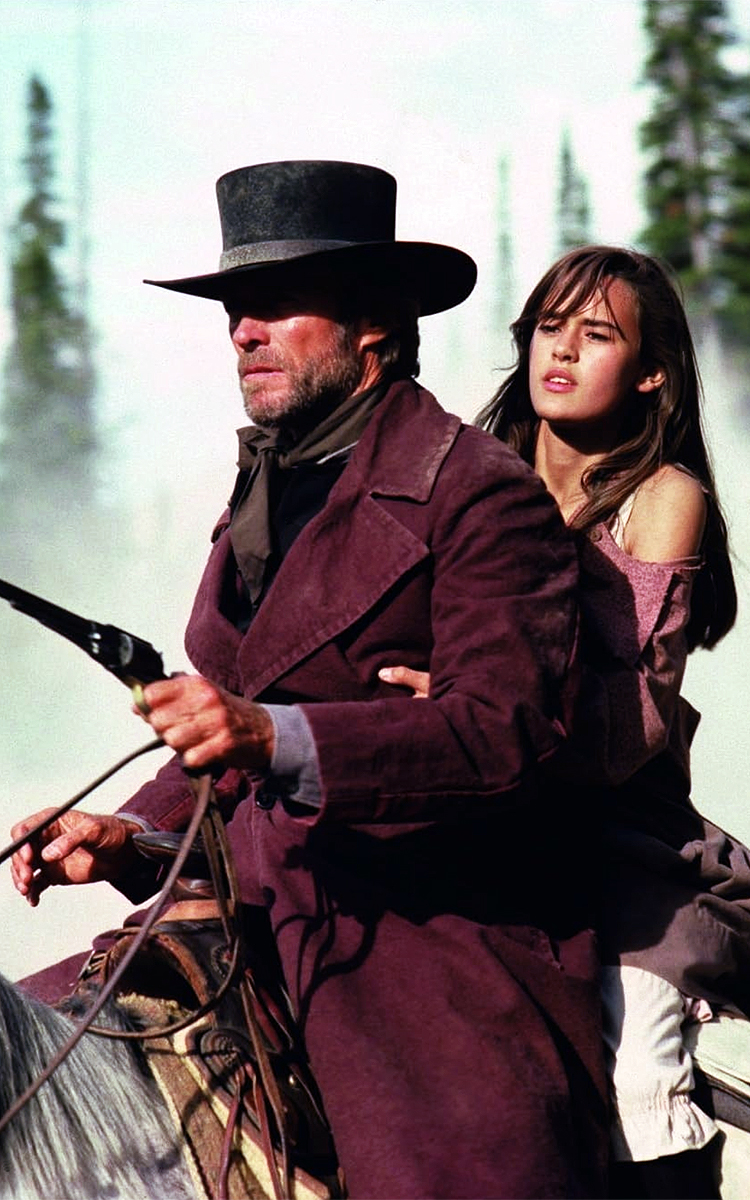
Pale Rider (1985)
Running Time: 1 hr. 55 min.
MPAA Rating: R
A
peaceful prospector settlement (around 20 families) in the woods is suddenly ambushed by a gang of gunmen, whose charging horses barrel through encampment structures, knocking them to the ground, as bullets are strewn across the unsuspecting inhabitants fleeing for their lives. Hull Barret (Michael Moriarty) attempts to fight back, but it’s no use; the raiders steal a few livestock on their way out, leaving bloodied injuries, destruction, and even a dead puppy (which looks comically fake in the few frames in which it appears). There’s no immediate explanation for why the culprits did the deed, but it instantly paints them as dastardly villains in desperate need of reprisal.
“They killed my dog.” 14-year-old Megan (Sydney Penny), the daughter of Sarah Wheeler (Carrie Snodgress) – who is Hull’s fiancee – is distraught, prompting her to pray to the Lord … for vengeance. She wants an avenging miracle, but it comes in the form of a grizzled preacher (Clint Eastwood), who happens to ride into town at the exact moment that Hull visits the local supply shop. And it’s a fortuitous coincidence; the prior attackers reside there, and are quick to begin beating Hull just for the sport of it. But the unconventional man of God intervenes, singlehandedly walloping the foursome of goons, who work for Coy LaHood (Richard Dysart) and his sniveling son Josh (Christopher Penn) – neighboring gold miners (using newfangled hydraulics to unearth minerals) who intend on terrorizing Barret’s community into abandoning their claim. “There’s nothing like a nice piece of hickory.”
In a delightful twist, the fearlessness and physical violence that surrounds Eastwood’s unnamed parson sharply clashes with his profession; religion and faith contrast sardonically with drinking, cursing, fighting, and skillfully wielding a sledgehammer. He also unleashes a consistent barrage of one-liners (epithets fit for an epitaph), as if an Old West James Bond (particularly ironic since one of his foes is Richard Kiel as a mostly silent, towering brute). “There’s a lot of sinners hereabouts.”
A revisionist Western of sorts, “Pale Rider” once again allows Eastwood to depict lawmen and outlaws and everyone in between, not as black-and-white heroes and villains but as varying shades of gray. He also adopts a general grittiness in characters and settings, ranging from believable dirt and grime to morbid bloodshed (and that rare Western winter vista, with snowcapped mountains). There’s no glossiness or idealism in his visualization of these California hamlets. And he plays his part incredibly well, with outward coldness and formidability hiding uncommon morals and gentleness, even though he’s not afraid to cause harm. “The lord certainly does work in mysterious ways.”
The basic premise, pitting David against Goliath, or the meek against bullies, isn’t too far removed from “Seven Samurai” or “Shane” (and “Witness,” released just a few months earlier). Similarly, “Pale Rider” is a precursor to “Unforgiven,” with comparable themes and definitions for right and wrong, also utilizing Joel Cox as the editor and Lennie Niehaus as the composer. This formula is dependable, with obvious antagonists who require a special kind of cinematic justice. Here, it carries on a bit too long, with side plots about youthful infatuation and a potential love triangle, while also stretching out the finale, which adds some extra baddies in the form of a corrupt marshal and his six deputies – a menacing bunch who provide fodder for amusing dispatching. Despite the unhurried nature of the conclusion, the eventual showdown between the reverend and his targets makes for some much-anticipated excitement. It’s not the best of Eastwood’s foray into modern-era Westerns (light on the tropes of legends and heavy on glamourless grimness), but it nevertheless delivers some heavy-hitting, surprisingly simple, brutal revenge.
– Mike Massie
- 6/10
Theatrical Release Date: June 28, 1985


